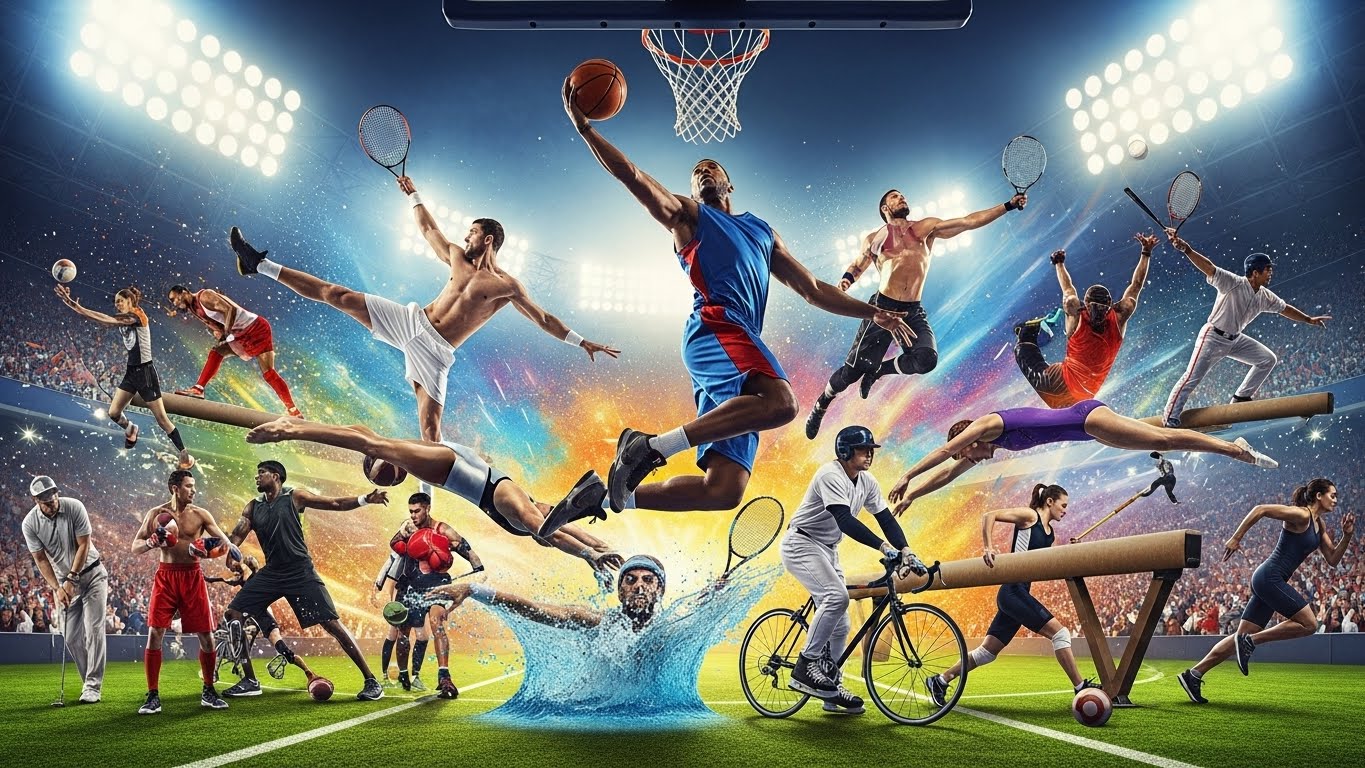

Introduction: The Universal Language of Sports
Across continents, languages, and generations, sports remain one of humanity’s most powerful connectors. Whether played on dusty village grounds or under the bright lights of massive stadiums, sports evoke passion, pride, unity, and emotion in a way few other human activities can. From the rhythmic chants of fans to the fierce determination in an athlete’s eyes, sports embody the spirit of striving, of pushing limits, and of belonging to something greater than oneself.
The story of sports is not merely about winning or losing. It’s about how individuals and societies use physical contests to define identity, express creativity, and find meaning. Over time, sports have become more than games—they are mirrors reflecting our cultures, politics, economies, and even our dreams.
The Ancient Origins of Sporting Spirit
Sports are as old as civilization itself. Ancient humans competed for survival, strength, and status long before they competed for trophies. Archaeological evidence shows that running, wrestling, and throwing contests existed in ancient Egypt, Greece, China, and Mesoamerica thousands of years ago. The Greeks formalized athletic competition through the Olympic Games in 776 BCE, turning sport into a cultural celebration of human potential.
In ancient Rome, gladiatorial contests captured both the brutality and spectacle of early sports, reflecting the empire’s obsession with dominance and entertainment. Meanwhile, civilizations across Asia developed martial arts not only as methods of defense but also as spiritual disciplines that cultivated balance between body and mind.
These early forms of sport laid the foundation for modern athletics. They introduced the idea that physical performance could symbolize national strength, moral virtue, and individual excellence—a concept that continues to shape sports today.
The Rise of Modern Sports
The 19th and 20th centuries witnessed the transformation of sports into organized, rule-based competitions. Britain, in particular, played a central role in codifying many sports that later spread worldwide—football (soccer), cricket, rugby, and tennis all have their modern roots in British institutions. Industrialization created more leisure time, and technological advances made communication and travel easier, allowing competitions to expand beyond local boundaries.
By the early 20th century, international tournaments became symbols of global cooperation. The revival of the Olympic Games in 1896 marked a new era where nations could showcase athletic prowess peacefully. Sports evolved into soft power—a diplomatic tool that promoted unity while maintaining healthy competition.
With the rise of media, particularly radio and television, sports became one of the first truly global spectacles. The 1954 FIFA World Cup and the 1960 Rome Olympics demonstrated how sports could captivate entire populations. Icons like Pelé, Muhammad Ali, and Billie Jean King transcended the boundaries of sport to become global symbols of excellence and activism.
The Emotional Core of Sports
Sports, at their heart, are emotional experiences. Every fan remembers the goosebumps before kickoff, the heartbreak of a missed shot, or the euphoria of a last-second victory. These emotions are universal and form the bond between athletes and audiences.
Athletes channel years of training, sacrifice, and discipline into moments that can last only seconds. Fans invest their emotions and identities in the teams they support, creating a shared community of joy and sorrow. This shared emotional landscape explains why a World Cup win can unite an entire country or why an Olympic gold medal can become a national symbol of pride.
Sports also teach resilience. Every defeat offers a lesson, every injury tests patience, and every comeback becomes an inspiration. They remind us that success is never guaranteed, and perseverance often matters more than talent.
Sports and Society: A Mirror of Change
Throughout history, sports have mirrored and sometimes accelerated social change. When Jackie Robinson broke baseball’s color barrier in 1947, it wasn’t just a sporting milestone—it was a civil rights breakthrough. When Billie Jean King defeated Bobby Riggs in 1973’s “Battle of the Sexes,” it became a moment of empowerment for women worldwide.
Sports have provided a platform for voices demanding justice, equality, and recognition. Muhammad Ali refused to fight in the Vietnam War, risking his career to stand for his beliefs. Colin Kaepernick knelt during the national anthem to protest racial injustice, sparking a global conversation about activism in sports.
These moments show that sports are never isolated from society. They reflect our collective struggles and aspirations. They remind us that the playing field can be a stage for far more than physical contests—it can be a ground for moral and cultural progress.
The Globalization of Sports
Today, sports transcend borders like never before. The English Premier League has fans in every corner of the world. The NBA’s influence stretches from Los Angeles to Lagos. Cricket unites countries across South Asia, the Caribbean, and beyond.
Modern technology allows fans to stream matches live, follow players on social media, and participate in global sports culture in real time. The globalization of sports has created both opportunities and challenges. It has expanded the reach of athletes and generated enormous economic growth, but it has also raised questions about fairness, commercialization, and local identity.
While globalization can blur cultural boundaries, it also offers a platform for diversity. Fans can admire athletes from different backgrounds and cultures, fostering a sense of global community. When millions cheer for an underdog from another continent, they are reminded that passion for the game unites rather than divides.
The Economics of Modern Sports
Sports have become one of the most powerful industries in the world. From billion-dollar broadcasting rights to sponsorship deals and merchandise sales, sports now operate as both entertainment and enterprise. Major tournaments generate economic booms for host cities, creating jobs and tourism revenue.
However, this commercialization has its downsides. The pressure to monetize sports has sometimes overshadowed their essence. Players face intense scrutiny, clubs turn into corporations, and fans often feel priced out of attending games. Scandals related to corruption, doping, and match-fixing have occasionally tarnished sports’ image.
Yet, even amidst commercialization, the heart of sports remains intact. The excitement of the game, the pride of representation, and the thrill of achievement continue to draw billions of people to watch, play, and celebrate.
Women in Sports: Breaking Boundaries and Shattering Stereotypes
For centuries, women’s participation in sports was restricted by societal norms. Today, female athletes have redefined the landscape with remarkable achievements and advocacy. From Serena Williams dominating tennis courts to Simone Biles redefining gymnastics, women have proven that athletic excellence knows no gender.
The rise of women’s sports is also a story of resilience and equality. Female athletes have fought for fair pay, representation, and recognition. The success of global events like the Women’s World Cup demonstrates that audiences are eager to celebrate women’s athleticism.
These athletes inspire millions of girls to dream big, proving that strength and grace can coexist. Women in sports continue to push boundaries, paving the way for a future where talent—not gender—defines greatness.
The Role of Technology in Sports Evolution
Technology has revolutionized sports performance, training, and viewing experiences. Advanced data analytics help coaches design strategies, while wearable sensors track athletes’ movements to prevent injuries. Instant replay and video assistant referees have improved fairness in officiating, though debates continue about their impact on the natural flow of the game.
For fans, technology has created immersive experiences. Virtual reality, augmented reality, and interactive broadcasts allow audiences to feel closer to the action than ever before. Social media has transformed athletes into global influencers, bridging the gap between stars and supporters.
Yet, with all these advancements, one truth remains constant—the essence of sports lies not in technology, but in human spirit. The raw emotion of a hard-fought contest, the unpredictability of the result, and the authenticity of effort still define the beauty of competition.
Youth Sports and the Future of Athletic Culture
Sports play a vital role in shaping young minds and bodies. Beyond physical fitness, youth sports teach discipline, teamwork, and perseverance. They offer lessons in humility through losses and confidence through victories. In an era dominated by digital distractions, sports provide a much-needed space for real-world connection and growth.
However, youth sports also face challenges. Over-specialization, parental pressure, and lack of access in underprivileged areas can hinder participation. To preserve the joy of playing, it’s essential that youth sports prioritize fun and learning over excessive competition.
Encouraging inclusivity, safety, and holistic development ensures that sports continue to build not just athletes, but better citizens. The future of sports depends on nurturing a generation that values fair play as much as winning.
Sports as a Tool for Peace and Diplomacy
Few platforms unite rival nations like sports. The concept of “sports diplomacy” has been used to foster understanding between countries that might otherwise remain divided. The “ping-pong diplomacy” between the United States and China in the 1970s is a historic example of how sports opened doors for political dialogue.
The Olympics themselves often serve as a stage for reconciliation. Even during times of conflict, the Games remind the world of our shared humanity. The image of athletes from opposing nations embracing after competition is a testament to the power of respect beyond politics.
Sports can build bridges where words fail. They create moments of unity that transcend differences, proving that competition need not breed hostility—it can nurture peace.
The Psychology of Champions
What separates great athletes from the rest? Beyond physical talent lies mental strength—the unyielding belief that victory is possible even in the face of adversity. Sports psychology has become an essential part of modern training, helping athletes master focus, confidence, and composure.
Champions understand that success often begins in the mind. They visualize their goals, embrace failure as feedback, and stay resilient under pressure. Mental conditioning allows them to perform consistently when stakes are highest.
At the same time, discussions about mental health in sports have grown more open. Athletes like Naomi Osaka and Michael Phelps have courageously shared their struggles, reminding the world that even champions are human. Their honesty has inspired a new wave of empathy and awareness about mental well-being in sports.
The Role of Fans: Heartbeat of Every Game
No sporting event is complete without fans. Their cheers fuel the players’ energy, and their loyalty sustains the teams through triumphs and failures. Fans are the soul of sports, transforming games into shared celebrations of identity and community.
Supporting a team often becomes part of a person’s identity. It creates bonds across generations—grandparents, parents, and children united by a shared passion. The collective emotion of thousands chanting in unison creates an atmosphere that no digital simulation can replicate.
Even in times when fans are absent, such as during global disruptions, their virtual presence and unwavering support remind athletes why they play. Sports, at their core, are not just about performance—they are about connection.
The Ethical Dimensions of Sports
As sports have grown, so have questions about ethics. Issues like doping, corruption, and exploitation of young athletes challenge the integrity of competition. The use of performance-enhancing drugs has led to scandals that damaged trust, while match-fixing has exposed vulnerabilities in even the most celebrated leagues.
Maintaining fairness is essential to preserving the credibility of sports. Organizations must uphold transparency and accountability, ensuring that athletes compete on equal terms. Ethical sportsmanship is not only about rules—it’s about respect for opponents, fans, and the spirit of the game itself.
In an age driven by money and fame, the true value of sports lies in honesty and integrity. When players and officials honor these principles, they keep the essence of competition pure and inspiring.
Sports and Health: The Human Connection
Beyond professional arenas, sports play a crucial role in public health. Regular physical activity improves cardiovascular fitness, mental well-being, and overall quality of life. Recreational sports encourage social connection, teamwork, and discipline—values that extend far beyond the field.
In many communities, local sports clubs act as social hubs where people of all ages come together. They offer belonging, purpose, and a sense of contribution. In a world where sedentary lifestyles are increasingly common, sports provide an antidote—a joyful, active expression of living fully.
The Future of Sports: Sustainability and Innovation
As the world evolves, so must sports. Sustainability has become a growing focus, with organizations seeking eco-friendly venues, renewable energy use, and responsible resource management. Future sporting events are likely to balance spectacle with sustainability, ensuring that competition does not come at the cost of the planet.
Innovation will also shape the future. Artificial intelligence, biomechanical analysis, and virtual training environments will redefine how athletes prepare and perform. Yet amid these changes, the human element will remain central. The passion, unpredictability, and drama that make sports unforgettable cannot be replaced by technology.
Conclusion: The Eternal Flame of Competition
From ancient arenas to modern stadiums, the story of sports is the story of humanity itself—our will to strive, to connect, to overcome. Sports are more than contests; they are cultural languages that express who we are and what we value. They teach us about fairness, resilience, humility, and unity.
Every match, every race, every leap captures the eternal human pursuit of excellence. Sports remind us that while victory may belong to one, the experience belongs to all. Whether we play or watch, win or lose, we all share in the same rhythm of hope and heart that defines the game of life.